The Companies Redefining the Future of Work: How Human-AI Teams Are Reshaping the Modern Workplace
Published October 17, 2026 • 3 Min Read
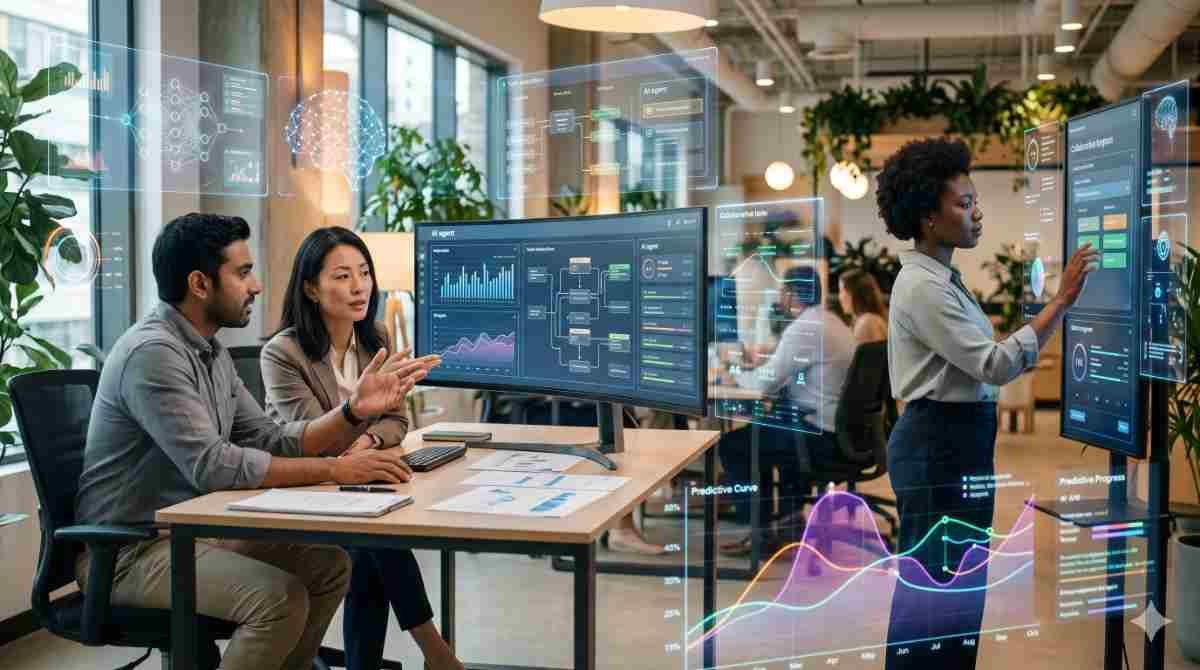
The future of work is no longer a distant idea discussed only at technology conferences. It is already taking shape inside offices, startups and global corporations, where artificial intelligence is changing how people communicate, make decisions and complete everyday tasks.
What is particularly interesting is that the companies leading this shift are not simply building AI tools. They are experimenting with a bigger question: what should work look like when humans and intelligent software work together?
Microsoft is one of the clearest examples. Its recent Work Trend Index describes the emergence of the “Frontier Firm” — organisations built around human-AI teams rather than traditional workplace structures. Microsoft’s research found that 82% of business leaders see 2025 as an important year to rethink strategy and operations, while many expect AI agents to become part of their workforce.
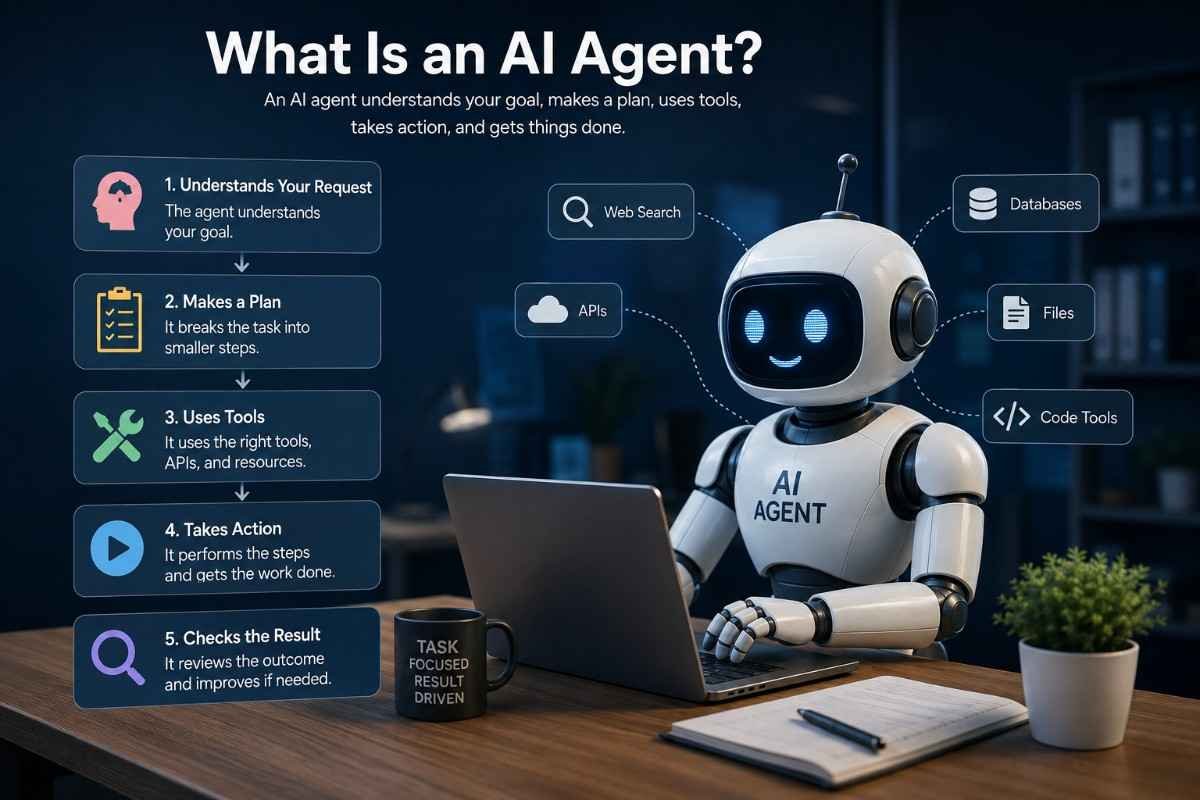
The company’s approach is moving beyond AI as a simple assistant. The idea is that employees will increasingly delegate tasks to AI agents, collaborate with them and eventually manage groups of digital workers. Microsoft’s 2026 research suggests that the most valuable employees may increasingly be those who know how to define goals, exercise judgement and design effective workflows between humans and AI.
Google is taking a similar direction. Google Cloud recently introduced its Gemini agent for work, designed to help employees answer questions, manage tasks, create content and write code. The move reflects a broader race among technology companies to develop AI agents capable of operating across different workplace tasks rather than simply responding to individual prompts.
Meta is also pushing the boundaries. Its latest AI models, Muse Wonder and Muse Wonder Full, are designed with capabilities around digital agents, memory and task execution. Meta's broader vision is centred on AI that can become a more personalised digital partner, potentially changing how people interact with software in both professional and personal settings.
Then there are companies such as Accenture, which are approaching the future of work from the services side. Rather than treating AI purely as a threat to traditional consulting, Accenture is building its business around helping organisations implement AI and redesign their operations. The company now has more than 110,000 AI and data professionals and is increasingly moving towards technology-enabled services and AI-focused solutions.
India is becoming an important part of this transformation too. Microsoft’s India research found that 93% of Indian business leaders surveyed expected to use AI agents to extend workforce capabilities within 12 to 18 months. That points to a workplace where AI adoption is moving rapidly from experimentation towards practical business use.
But the future of work is not simply a story about productivity.
There are serious questions about jobs, privacy, surveillance and human control. Recent examples show that some organisations are already using AI to monitor and evaluate employee interactions, raising concerns about how far workplace automation should go.
The bigger shift, therefore, may not be about humans being replaced by machines. It may be about humans learning to work differently.
The companies redefining work today are effectively testing a new model: fewer repetitive tasks, more AI-assisted decision-making, flexible teams and employees who manage technology rather than simply use it.
The workplace of tomorrow may not have fewer humans.
It may simply have a very different definition of what a human worker does.