Why Digital Transformation Projects Fail and How Leaders Can Avoid It
Published • 3 Min Read
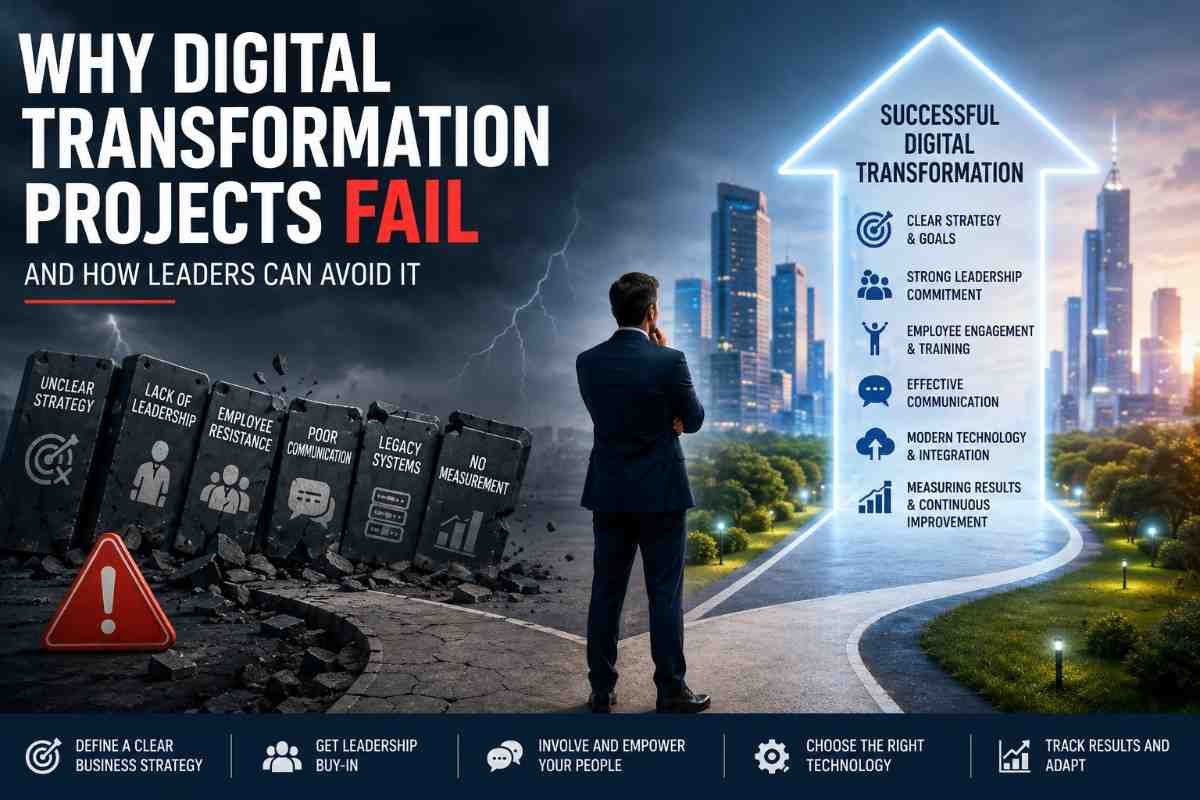
Digital transformation has now turned into one of the top priorities of enterprises in various industries. Firms are implementing cloud computing, advanced software solutions, data technologies, automation, and digital customer experiences in order to increase efficiency and competitiveness.
But quite often, digital transformation projects fail to produce the desired outcomes.
The issue is rarely technical in nature. The actual difficulties that organizations face include **strategy, leadership, communication, people, and execution**.
Here are some of the most frequent causes why digital transformation projects fail and how business leaders can prevent that.
1. Lack of a Business Strategy
The lack of a clearly defined business strategy to implement the technologies is another common mistake.
For example, the company may buy new software just because competitors use it. Without a clear goal it will be impossible to assess the result of the work done.
Before implementing technologies, the company should define its goals like reduction of costs, improvement of customers' experience, etc.
Technology should serve business strategy but not the vice versa.
2. Lack of Leaders' Support
The digital transformation cannot depend only on the IT department.
If the leaders of the company do not participate in the process actively, the employees will have trouble understanding the reason for the changes and what benefits they will bring to the company.
CEOs, CIOs, COOs and other top managers should explain the reasons for the transformation.
3. Resistance of Employees to Change
Employees are often required to learn new systems, change work processes, and use new procedures.
Without the appropriate training and communication, employees can resist the transformation.
Leaders need to engage employees early, show them the advantages of changes, conduct proper training, and listen to their concerns.
Transformation is ultimately all about people as much as about technology.
4. Trying to Change Everything at Once
Big companies usually have complicated systems and processes in place. The idea of trying to change everything at once can lead to unnecessary risks.
The right strategy would be to focus on important areas and to make changes in a more systematic way.
Companies can begin with some particular department or process, measure results, learn lessons, and proceed further.
5. Neglecting Legacy Systems
Many companies still depend on outdated technology.
Upgrading the legacy system is not easy since they store crucial information and facilitate vital processes.
Instead of getting rid of all legacy systems at once, the leadership team must come up with an appropriate modernization plan.
Some times it will be easier to integrate and modernize slowly than get rid of them completely.
6. Failure to Measure Results
There are key performance indicators for a transformational project.
According to the objective of the company, they will measure either;
* Savings
* Efficiency
* Customer satisfaction
* Growth in revenues
* Employees' adoption
* Time of processing
Otherwise, it will be impossible to tell whether the investment was worthwhile.
## How Leaders Can Drive Digital Transformation
A successful transformation process requires a combination of **clear strategy, good leadership, engagement of employees, realistic implementation**, and continual measurement.
Firstly, focus on the business problems, not the technological trends. Formulate realistic goals, engage with your employees, and introduce the change gradually.
Finally, digital transformation should never be seen as a one-off technology initiative.
It is a long-term business strategy.
## Conclusion
The digital transformation projects usually fail because companies underestimate the role of people, strategy, and implementation rather than because of their failure to select the appropriate technologies.
In other words, for today's business leaders, the key objective is not only to make your business more digital. It should also help you to deliver measurable benefits in terms of efficiency, customer experience, and growth.