Open Banking Explained: Benefits, Security, and the Future of Digital Finance
Published • 4 Min Read
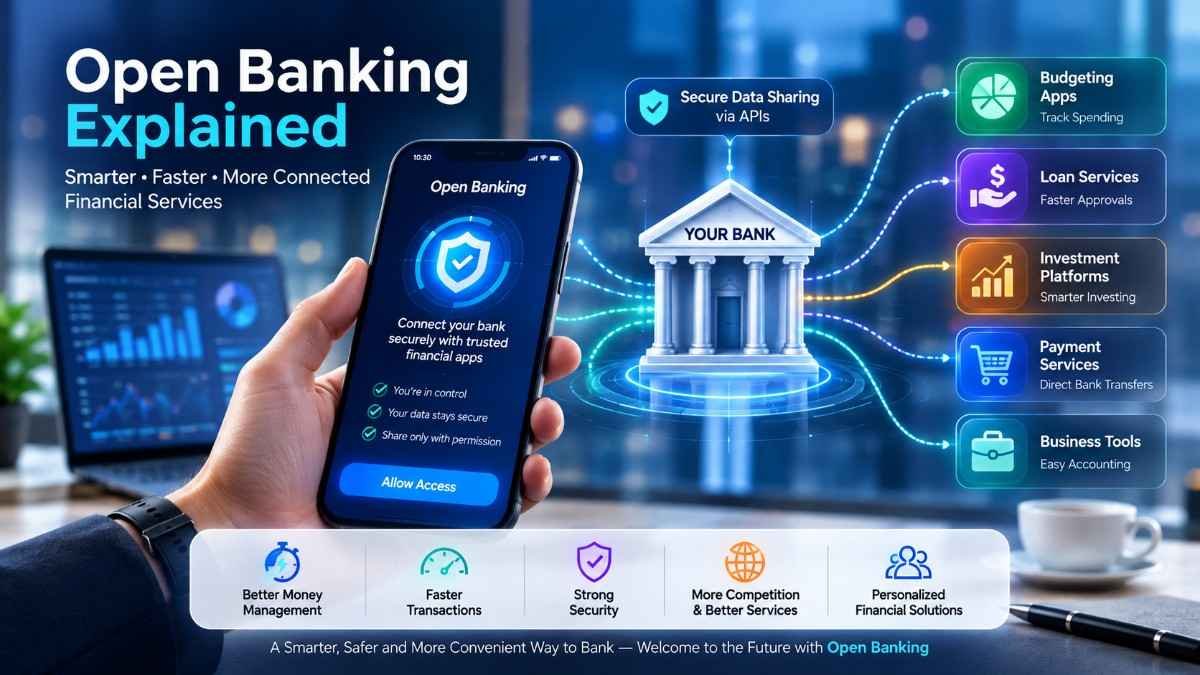
Technology has changed the way we manage money. Today, people want faster, safer, and more convenient banking services. One of the biggest changes in the financial world is Open Banking. While the term may sound technical, the idea is actually simple. Open Banking allows customers to securely share their banking information with trusted financial service providers to access better products and services.
Let's understand Open Banking in easy language.
What Is Open Banking?
Open Banking is a system where banks allow customers to share their financial data with approved third-party companies through secure technology called APIs (Application Programming Interfaces).
The important thing to remember is that you are always in control. Your banking information is only shared if you give permission. Without your approval, no company can access your financial data.
For example, if you want a budgeting app to track your spending, Open Banking lets the app securely connect to your bank account after you approve the connection.
How Does Open Banking Work?
The process is simple:
- You choose a financial app or service.
- The app asks for permission to access your banking information.
- You approve the request through your bank.
- Your bank securely shares the required data.
- The app uses the information to provide useful financial services.
The connection is encrypted and designed to keep your personal information secure.
Benefits of Open Banking
Better Money Management
Many financial apps use Open Banking to help users track income, expenses, savings, and investments in one place. This gives you a clear picture of your finances.
Faster Loan Approvals
Lenders can securely review your financial information with your permission. This can speed up loan approvals because there is less paperwork involved.
Personalized Financial Services
Banks and financial companies can offer products that match your spending habits and financial goals. This means you receive more relevant offers instead of generic ones.
Easier Payments
Open Banking supports secure account-to-account payments without always needing credit or debit cards. This can make online transactions faster and more convenient.
More Competition
Since more financial companies can offer services, customers enjoy better products, lower fees, and improved customer experiences.
Is Open Banking Safe?
Security is one of the biggest priorities in Open Banking. Banks use strong encryption and secure authentication methods to protect customer information.
Customers also have full control over their data. You can:
- Decide who can access your information.
- Choose what information to share.
- Cancel access whenever you want.
However, it is always important to use trusted financial apps and never share your banking passwords with anyone.
Real-Life Examples
Here are a few ways people use Open Banking every day:
- Budgeting apps that automatically track expenses.
- Apps that compare loans from different banks.
- Investment platforms that analyze your financial health.
- Business accounting software that connects directly with bank accounts.
- Payment services that allow direct bank transfers.
These services save time and make financial management much easier.
Challenges of Open Banking
Although Open Banking offers many advantages, there are still some challenges.
Some customers worry about data privacy because they are not familiar with how information is shared. Financial companies must continue educating users about security and consent.
Another challenge is ensuring all banks and financial service providers follow the same security standards. Governments and financial regulators continue to improve rules to protect consumers.
The Future of Open Banking
Open Banking is expected to grow rapidly over the next few years. More banks, fintech companies, and businesses are adopting this system to improve customer experiences.
Future developments may include smarter financial planning tools powered by artificial intelligence, faster international payments, personalized investment advice, and easier access to financial products.
As digital banking continues to evolve, Open Banking will play a major role in making financial services more connected, efficient, and customer-friendly.
Conclusion
Open Banking is changing the way people interact with their banks. By allowing customers to securely share financial data with trusted providers, it creates better banking experiences, faster services, and more personalized financial solutions.
The key advantage of Open Banking is that customers remain in control of their information at all times. With strong security measures and growing innovation, Open Banking is helping build a more transparent, competitive, and convenient financial future for everyone.